Big bank changes RBA rate call as cost pressures ease

Economists at National Australia Bank say the Reserve Bank’s next interest rate move is likely to be lower rather than upward.
NAB joins the Commonwealth Bank and ANZ in forecasting the cash rate will remain steady at 4.35 per cent for the remainder of 2026, having previously predicted another increase in August.
Westpac was the last of the big four banks to stick to interest rate hike calls, with two more rate hikes planned for the year.
Recently released GDP data and NAB’s business survey released on Tuesday show momentum in the economy is slowing, NAB chief economist Sally Auld and Australian economic chief Gareth Spence said in a research note.
“Looking back to February – when they started the march – the RBA’s background was growth above the trend rate or sustainable rate with the economy operating above capacity and inflation above target,” Mr Spence told AAP.
“The background of these activity indicators has changed somewhat.”
Although the NAB survey showed business conditions improved 10 index points to minus 14 in May, conditions and confidence remained significantly softer than at the start of the year ahead of the RBA’s three interest rate hikes and the war in Iran.
Inflation pressures resulting from the blockade of the Strait of Hormuz were not as strong as initially feared.
Price and cost growth also slowed in May, due in part to lower fuel prices and the federal government’s consumption tax cut.
While the increase in purchasing costs decreased from 4.5 percent in April to 2.6 percent, the increase in final product prices decreased from 1.8 percent to 0.9 percent.
“We haven’t seen this much cost shock on a broad basis,” Mr. Spence said, noting that growth was stronger in the agricultural sector due to heavy reliance on diesel and fertilizer.
Capacity utilization, a key metric tracked by the RBA, fell below 82 per cent for the first time in more than a year.

Mr Spence said that with interest rates back into restrictive territory, economic activity slowing, the labor market softening and capacity pressures easing, the RBA would have more confidence in waiting and seeing whether inflation would begin to moderate after mid-year.
Household spending was also softer than expected by the end of 2025, he said.
Consumer confidence, a rough forward-looking indicator of spending, fell 2.9 per cent at the beginning of June, according to the Westpac-Melbourne Institute’s consumer sentiment survey.
“Cost of living issues are back with a vengeance in June,” said Matthew Hassan, head of Australian macro forecasting at Westpac.
Tax changes in the federal budget have created a noticeable shift in the way consumers view property as a potential investment.
While the rate of those who nominated real estate as the smartest place to save money decreased from 9.2 percent to 4.5 percent, the rate of those who thought paying off their debts was the smartest option increased by 5.2 points to 27 percent.
Mr Spence said falling property prices would also reduce consumption as a result of a softer wealth effect, with rising household wealth as a result of higher house values making people more confident about spending.
The total value of homes in Australia rose 2.5 per cent in the March quarter to $12.8 trillion, up from a 4 per cent increase in the December quarter, according to Australian Bureau of Statistics figures.
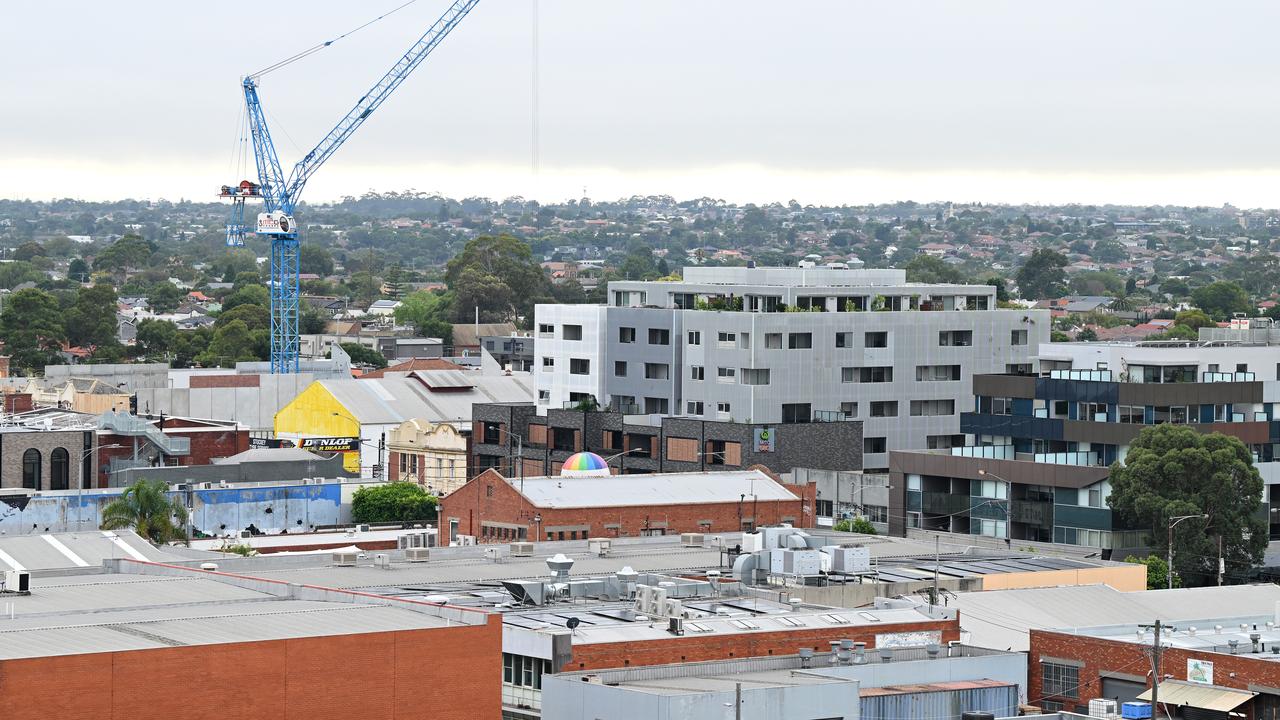
Some lenders have already begun cutting fixed mortgage interest rates as forecasters increasingly rein in their rate hike forecasts.
ANZ cut two- and three-year fixed home loan interest rates by up to 0.1 percentage point on Friday, while rival lender Macquarie cut its three-year fixed rate by half a point.
Sally Tindall, director of data insights at Canstar, said the cuts, although modest, were enough to put Macquarie and ANZ ahead of their big bank rivals with the majority of the market still trending upward.

Australia’s Associated Press is the beating heart of Australian news. AAP is Australia’s only independent national news channel and has been providing accurate, reliable and fast-paced news content to the media industry, government and corporate sector for 85 years. We inform Australia.


